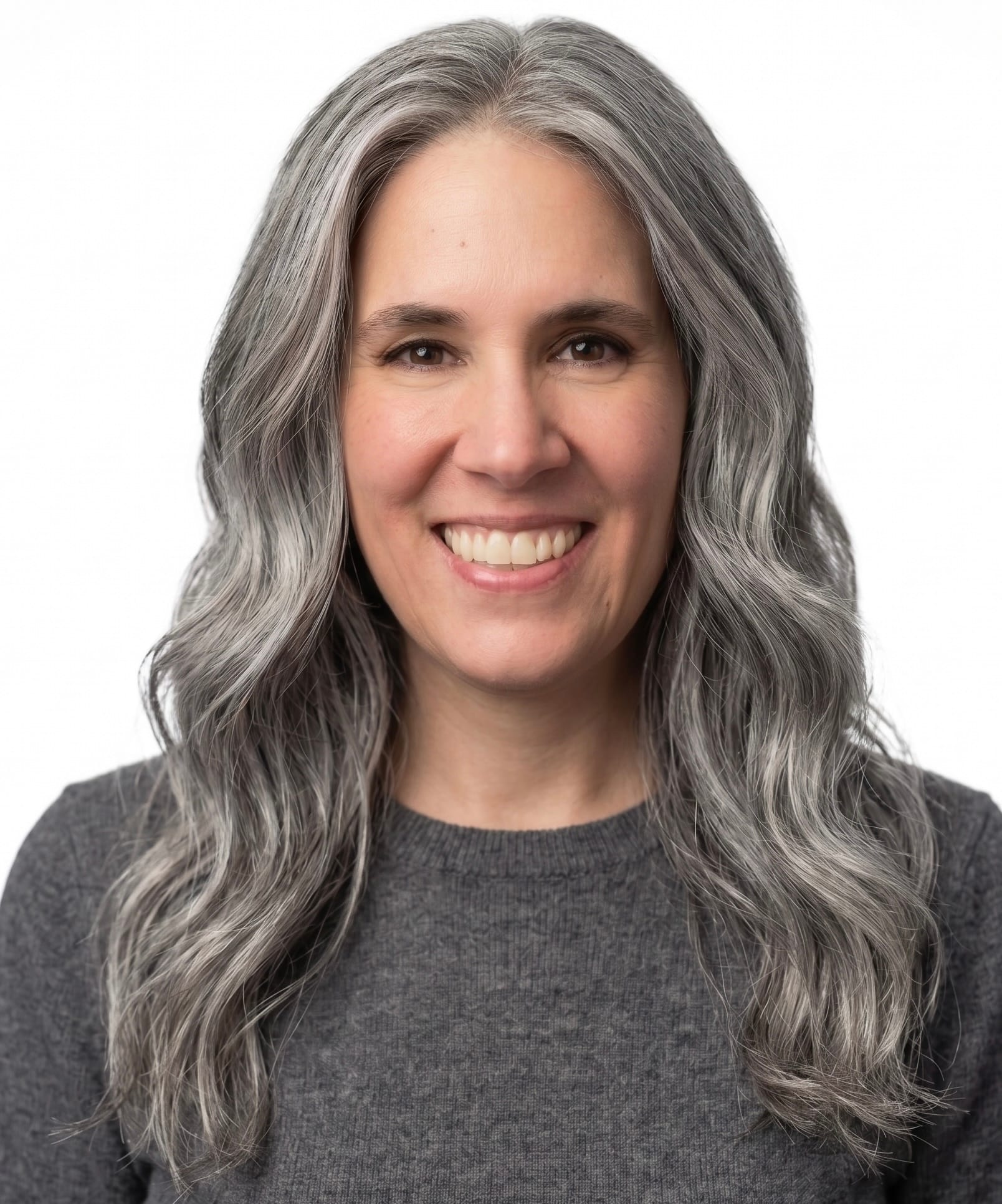
Kirsten Fisch, MSN, RNC-MNN, IBCLC, LCCE Kirsten is a women's health nurse who specializes in high-risk pregnancy and postpartum care. She is certified in Maternal Newborn Nursing, a board-certified lactation consultant (IBCLC), and a Lamaze Certified Childbirth Educator. She works with women from conception through the postpartum period. Passionate about empowering women throughout their reproductive journeys, Kirsten combines evidence-based care with compassionate support to promote the health and well-being of mothers and babies.
Nobody Told Me I Had a Choice
As a mother-baby nurse, I’ve spent years sitting beside new parents in some of the most vulnerable hours of their lives. In those moments, exhausted, tender, overwhelmed, a lot of parents are handed a breastfeeding pamphlet and a slogan and expected to figure the rest out on their own.
That always bothered me. And it’s a big part of why we built the course we did.
What I’ve Learned at the Bedside
My approach as a nurse has always been simple: my job is to support you, not to advocate for a predetermined outcome. That means listening (really listening) not just to what you say, but to what your body language, your hesitation, and your silences are telling me too.
When a new mother seems uncertain about breastfeeding, I don’t push. I don’t minimize her doubts or talk her out of them. I hold that space with her, without judgment, while she figures out what feels right.
What I might gently suggest in those moments of ambivalence is this: keep stimulating milk production, whether through nursing directly or pumping, while you continue making your decision. That way, if she decides she wants to breastfeed, the option is still open. She hasn’t lost anything by taking the time she needs to decide. That’s not pressure. That’s protecting her choices.
Because here’s what I believe at the core of my practice: a mother who feels heard makes better decisions for herself and her baby than one who feels managed. Also, I can’t know what the “better” decision is for her.
So Why a Prenatal Course?
If I’ve spent my career supporting women through feeding decisions without judgment, you might wonder why we’d create a course specifically designed for families who want to breastfeed. Isn’t that taking a side?
Here’s how I think about it: supporting a mother’s autonomy means supporting her when she chooses breastfeeding just as much as when she doesn’t. And the families who come in wanting to breastfeed deserve the best possible chance at success.
That’s exactly what this course is built around.
Because here’s what I watched happen over and over again at the bedside: families would arrive at the hospital with every intention of breastfeeding, and then the first few days would happen to them. The latch struggles. The engorgement. The exhaustion. The well-meaning but conflicting advice from every nurse and doctor who walked through the door. The supplementation conversation at 2am when the baby had lost weight and everyone was scared.
Those early hospital days are a minefield. And most families walk into them completely unprepared, not because they didn’t care, but because nobody told them what to expect.
Knowledge Changes Everything
When Carole and I developed this course, we kept running into a version of ourselves we didn’t like: writing material that was subtly persuasive rather than genuinely informative. Loading the content with benefits. Quietly building a case. It took real effort to step back and ask: are we teaching, or are we convincing?
The course we ultimately built is for families who have already made their choice. They want to breastfeed. Our job isn’t to talk them into it, it’s to give them the knowledge and skills to actually do it before they ever set foot in a delivery room.
That means covering what the first hours and days genuinely look like. The mechanics of a good latch. What normal newborn feeding patterns actually are (spoiler: they’re relentless). How to read hunger cues. What engorgement feels like and what to do about it. How to navigate the hospital environment, where the pressures and protocols aren’t always set up in favor of breastfeeding success.
Knowing these things in advance doesn’t guarantee a perfect experience. But it means you walk in prepared rather than blindsided. It means you can recognize a problem for what it is instead of assuming something is catastrophically wrong. It means you have context when decisions need to be made quickly.
What Nobody Mentions in the Breastfeeding Pamphlet
Even within a course designed for families who want to breastfeed, I believe in telling the whole truth. So let me fill in a few gaps that the standard pamphlets tend to skip:
Latch pain in the early days is common. The idea that it “shouldn’t hurt if you’re doing it right” sets a lot of women up to believe something is wrong with them when it isn’t. Early nipple tenderness is normal. It typically improves, but it’s real, and you deserve to know it’s coming.
Not every body produces the same amount of milk. Supply challenges are physiological realities for some women, not character flaws. Knowing this in advance means you can seek support without shame if it happens to you.
The hospital environment can work against you. Shift changes mean inconsistent advice. Newborn weight checks create pressure. Supplementation decisions get made fast, in the middle of the night, when you’re least equipped to ask questions. Going in informed means you can be an active participant in those conversations rather than a passive recipient of them.
How you feed your baby does not define you as a parent. I say this to every family I work with, and I mean it: the goal is a healthy baby and a parent who feels capable and supported. Breastfeeding is one path to that. It isn’t the only one.
What Good Support Actually Looks Like
Whether you’re in our course, in a hospital room, or sitting in your pediatrician’s office, you deserve support that looks like this:
Complete, honest information about both the benefits and the challenges. Responses to your questions that don’t make you feel judged for asking them. Room to change your mind, in either direction, without being talked out of it. And recognition that your body, your circumstances, your mental health, and your support system are all real and relevant factors, not excuses.
If you ever sit across from someone who makes you feel like a failure for how things are going? That’s not good support. You deserve better.
You Deserve to Walk In Prepared
One of the most consistent things I hear from parents who take this course is that they finally felt equipped, like someone had handed them a map before the journey instead of after they’d already gotten lost.
That’s all I’ve ever wanted for the families I work with. Not compliance. Not guilt. Just knowledge, confidence, and the real possibility of the experience you’re hoping for.
You want to breastfeed? Let’s give you the best possible chance.
Kirsten Fisch, MSN, RNC-MNN, IBCLC, LCCE
Kirsten is a women's health nurse who specializes in high-risk pregnancy and postpartum care. She is certified in Maternal Newborn Nursing, a board-certified lactation consultant (IBCLC), and a Lamaze Certified Childbirth Educator. She works with women from conception through the postpartum period. Passionate about empowering women throughout their reproductive journeys, Kirsten combines evidence-based care with compassionate support to promote the health and well-being of mothers and babies.