
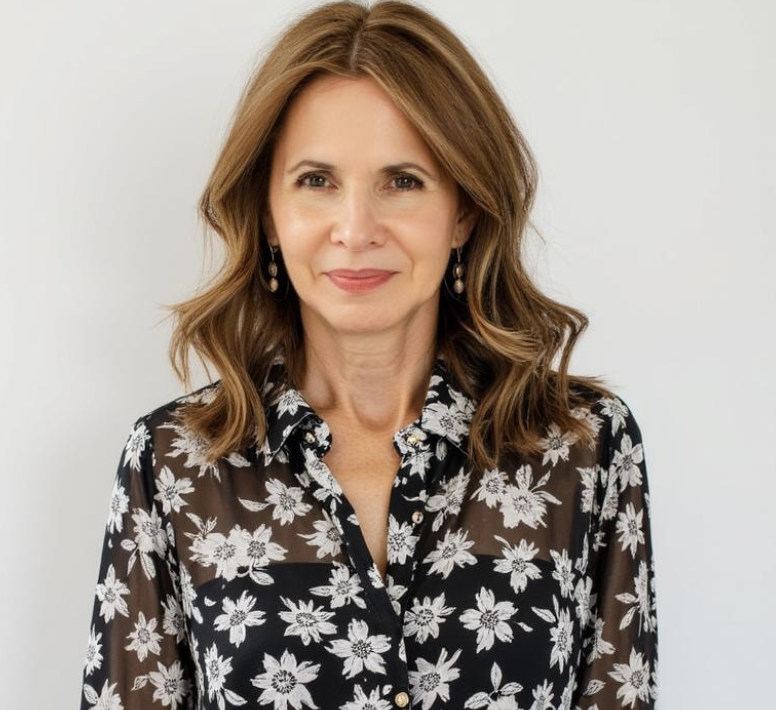
Carole Falletta
Co-Founder at - Momentum Health NetworkCarole Falletta, MS, MA, PMHNP-BC, FNP-BC, RNC-EFM, IBCLC, LCCE Carole is a nurse practitioner with over 30 years of experience in nursing, specializing in women's health, newborn care, and reproductive and postpartum mental health. Actively practicing in healthcare, she supports women and families during the perinatal journey through compassionate, evidence-based care. A dual board-certified nurse practitioner in psychiatric and family health, Carole is also an International Board-Certified Lactation Consultant (IBCLC) and Lamaze Certified Childbirth Educator, combining her clinical expertise and passion for education to empower mothers and support babies.
Let’s talk about something real.
Recently, I was caring for a new mother who had just delivered a healthy baby after what, on paper, would be called a “straightforward induction.” Her labor was relatively quick, and the delivery itself went smoothly. During our conversation after birth, she quietly brought up a part of her experience that she was still trying to make sense of.
Her epidural.
She shared that while the induction and birth went “well,” the placement of her epidural did not. In fact, it had to be placed twice. She remembered how two different providers attempted the procedure, and the discomfort she felt in the moment. The anesthesiology team was informative, and transparent—they explained that because the placement was tricky, she might develop a headache afterward.
And she did.
In the days following her baby’s birth, she developed that expected headache. But what surprised her most wasn’t just the physical discomfort—it was the lingering emotional unease. Even with a healthy baby in her arms, she couldn’t quite shake the feeling of being rattled by what had happened. She kept wondering, Why did it take two tries? Was something wrong with my spine? Was I too tense? Did I do something wrong?
She wasn’t upset with her providers—they had been communicative and supportive—but she felt unsettled.
This isn’t uncommon.
The Myth of “Everything Went Fine”
When a baby is healthy and delivery is “uncomplicated,” it’s easy for both loved ones and medical teams to shift focus away from the birth parent’s emotional experience. But having a “healthy baby” and a technically successful birth doesn’t mean that everything felt okay on a deeper level.
Sometimes, small moments—like a tough epidural placement, unexpected pain, a scary conversation, or even the tone of voice in the room—stick with us. And those moments deserve space to be acknowledged.
Birth Stories Are Not Just Physical Events
What this mother experienced was a very real emotional response to a moment in her birth that left her feeling vulnerable and unsure. It wasn’t about blaming anyone. It wasn’t even about something going “wrong.” It was about the need to understand, to feel heard, and to feel whole in her story.
Birth is more than a medical event. It’s emotional, psychological, and for many—spiritual. When something doesn’t sit right, even in an otherwise “good birth,” it matters.
If You’re Still Processing Your Birth…
You’re not alone.
It’s okay if there’s one piece that keeps coming back to you. It’s okay to want to talk about it more than once. It’s okay if you’re still wondering “why?” even weeks later.
You’re allowed to have questions. You’re allowed to want clarity. You’re allowed to feel a little shaken, even if you’re also deeply grateful for your baby.
And if you’re a friend, partner, nurse, or provider supporting a new parent—don’t skip over the “but” in their story.
“Everything was fine, BUT…”
That’s the part that needs to be heard.

Carole Falletta, MS, MA, PMHNP-BC, FNP-BC, RNC-EFM, IBCLC, LCCE Carole is a nurse practitioner with over 30 years of experience in nursing, specializing in women's health, newborn care, and reproductive and postpartum mental health. Actively practicing in healthcare, she supports women and families during the perinatal journey through compassionate, evidence-based care. A dual board-certified nurse practitioner in psychiatric and family health, Carole is also an International Board-Certified Lactation Consultant (IBCLC) and Lamaze Certified Childbirth Educator, combining her clinical expertise and passion for education to empower mothers and support babies.