


Carole Falletta
Co-Founder at - Momentum Health NetworkCarole Falletta, MS, MA, PMHNP-BC, FNP-BC, RNC-EFM, IBCLC, LCCE Carole is a nurse practitioner with over 30 years of experience in nursing, specializing in women's health, newborn care, and reproductive and postpartum mental health. Actively practicing in healthcare, she supports women and families during the perinatal journey through compassionate, evidence-based care. A dual board-certified nurse practitioner in psychiatric and family health, Carole is also an International Board-Certified Lactation Consultant (IBCLC) and Lamaze Certified Childbirth Educator, combining her clinical expertise and passion for education to empower mothers and support babies.
You’ve timed your contractions, packed your bag, and made your way to the hospital or birth center. You’re ready. You’re uncomfortable. You may even be thinking, “Finally—relief is coming.”
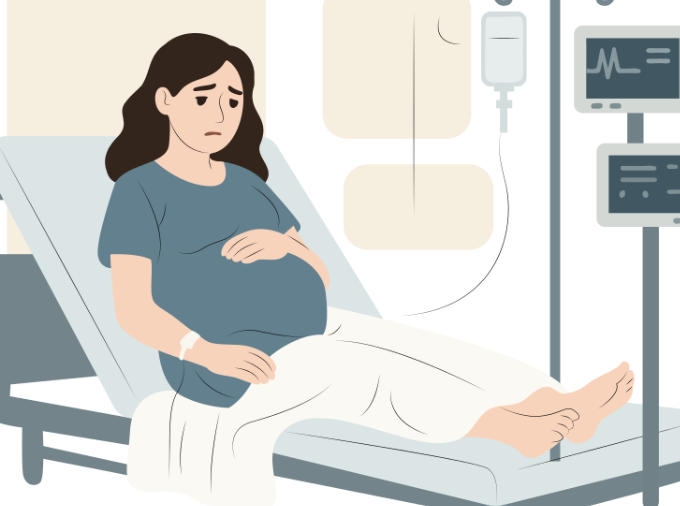
But then… you wait.
This is one of the most surprising parts of labor for many parents: arriving does not always mean immediate admission, a labor room, or pain medication. And while this isn’t always what you want—especially when contractions are intense—it’s very common.
Where Most People Give Birth
In the United States, the vast majority of births happen in hospitals:
- Over 98% of births take place in hospitals
- Around 1–1.3% occur at home
- Roughly 0.5% happen in freestanding birth centers
(Source: CDC National Vital Statistics Reports)
Because hospitals care for so many laboring patients at once, timing and availability play a big role in how quickly things move when you arrive.
You’ve Arrived—But You’re Not “In” Yet
When you arrive, most people are first evaluated in triage. Triage is not an emergency situation—it’s simply the intake process where the care team determines what stage of labor you’re in and what support you need next.
During this time, you may:
- Be monitored briefly to assess contractions and baby’s heart rate
- Have your cervix checked
- Answer questions about your symptoms and history
- Wait for a labor room to become available
Even if your contractions feel strong, this phase can take time.
Waiting for Pain Relief (Including an Epidural)
Many parents assume that once they arrive, pain relief—especially an epidural—will happen quickly. In reality, several steps must occur first:
- Admission to a labor room
- Lab work and IV placement
- Anesthesia availability
If the unit is busy, or if anesthesia is assisting other patients, there may be a delay.
While frustrating, this delay isn’t about withholding care—it’s about safety and coordination.
And here’s something many people don’t realize:
That waiting period can sometimes help labor move forward.
Walking, swaying, standing, or laboring without being confined to a bed right away can support better baby positioning and natural progression—sometimes making labor more efficient once you are admitted.
“I Didn’t Know I’d Be Waiting in Triage”
Triage spaces are often smaller, less private, and more clinical than labor rooms. You may hear other patients, have limited mobility, or feel like things are moving slowly.
This can feel discouraging—but it’s temporary. The goal is to ensure you’re admitted at the right time, when resources and support can be fully focused on you.
Birth Centers and Home Births: Is It Different?
- Birth centers tend to be quieter and may allow quicker access to a birthing room, but they still assess labor before admission.
- Home births remove the room-waiting factor, but your midwife still evaluates labor progress and may encourage rest or movement before active labor begins.
No matter the setting, labor rarely moves in a straight line.
Why Knowing This Ahead of Time Matters
Understanding that waiting can be part of labor helps you:
- Feel less anxious or discouraged
- Avoid interpreting delays as something being wrong
- Use early labor time productively rather than fighting it
Preparation doesn’t remove discomfort—but it does reduce fear.
Gentle Ways to Cope While Waiting
- Walk or change positions if allowed
- Focus on breathing and staying hydrated
- Use support tools like music or visualization
- Ask for updates and clarity from your care team
You are allowed to ask questions. You are allowed to advocate for comfort.
Sometimes Waiting Is Part of the Work
Not every delay feels welcome—but not every delay is a setback. Sometimes, the quiet moments before admission allow your body to do important work.
Arriving prepared for this reality can help you stay calm, focused, and empowered—no matter how your labor unfolds.

Carole Falletta, MS, MA, PMHNP-BC, FNP-BC, RNC-EFM, IBCLC, LCCE Carole is a nurse practitioner with over 30 years of experience in nursing, specializing in women's health, newborn care, and reproductive and postpartum mental health. Actively practicing in healthcare, she supports women and families during the perinatal journey through compassionate, evidence-based care. A dual board-certified nurse practitioner in psychiatric and family health, Carole is also an International Board-Certified Lactation Consultant (IBCLC) and Lamaze Certified Childbirth Educator, combining her clinical expertise and passion for education to empower mothers and support babies.