

Kirsten Fisch
Co-Founder at - Momentum Health NetworkKirsten Fisch, MSN, RNC-MNN, IBCLC, LCCE Kirsten is a women's health nurse who specializes in high-risk pregnancy and postpartum care. She is certified in Maternal Newborn Nursing, a board-certified lactation consultant (IBCLC), and a Lamaze Certified Childbirth Educator. She works with women from conception through the postpartum period. Passionate about empowering women throughout their reproductive journeys, Kirsten combines evidence-based care with compassionate support to promote the health and well-being of mothers and babies.
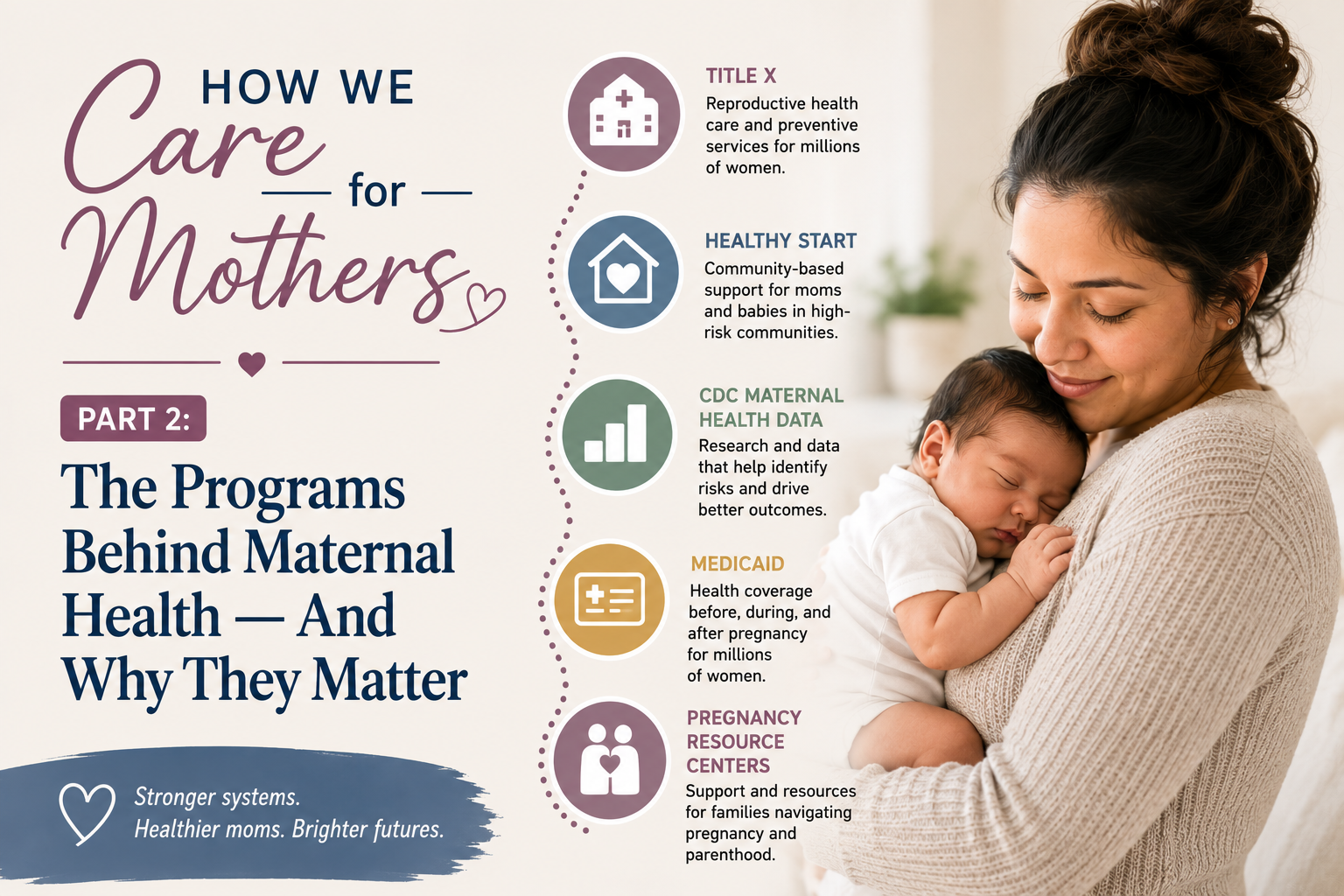
Most families have never heard of Title X, Healthy Start, or the CDC’s maternal health programs. Yet these programs quietly shape access to care, support services, and public health efforts across the country.
A Quick Recap
In our first article, The State of Maternal Health in America: What the Numbers Actually Tell Us, we looked at the reality of maternal health in the United States.
The findings were sobering.
More women die from pregnancy-related complications in the United States than in many other high-income countries. Significant disparities remain. And many of those deaths are considered preventable.
If that article focused on outcomes, this article focuses on the systems working behind the scenes.
Because maternal health is about much more than what happens in a doctor’s office or hospital room.
The Programs Most Families Never See
When people think about maternity care, they usually think about:
- OB/GYN visits
- Ultrasounds
- Labor and delivery
- Postpartum appointments
What many don’t realize is that there are also public health programs working quietly in the background.
Some help women access healthcare.
Some support families during pregnancy and early parenthood.
Some collect the data researchers use to understand why mothers and babies experience better outcomes in some communities than others.
Most families will never know these programs exist.
Yet they influence the healthcare system around them every day.
What Is Title X?
Title X is the nation’s only federal program dedicated specifically to reproductive healthcare.
For many women, Title X-supported clinics provide:
- Pregnancy testing
- Birth control services
- Cancer screenings
- STI testing and treatment
- Preventive healthcare
Many of the women who use these clinics are uninsured or have limited access to healthcare.
Why Parents Should Care
Even if you’ve never visited a Title X clinic, these programs help provide preventive care for millions of women.
Supporters believe they improve access to healthcare.
Critics argue similar services can be provided through other healthcare systems.
Regardless of where someone stands politically, changes to Title X have the potential to affect healthcare access in many communities.
What Is Healthy Start?
Healthy Start was created to improve maternal and infant health outcomes in communities facing higher risks.
Unlike traditional healthcare programs, Healthy Start often focuses on challenges outside the hospital.
Programs may provide:
- Home visiting services
- Parenting education
- Care coordination
- Referrals to community resources
- Support during pregnancy and early parenthood
Why Parents Should Care
A healthy pregnancy depends on more than medical care.
Transportation.
Housing stability.
Food access.
Social support.
These factors can influence outcomes just as much as what happens during a prenatal appointment.
Healthy Start was designed to help families navigate some of those challenges.
Why Does the CDC Track Maternal Health?
Many people assume healthcare data simply exists.
It doesn’t.
The CDC collects and analyzes information about maternal deaths and serious pregnancy complications.
Researchers use this information to answer questions such as:
- Why are mothers dying?
- Which communities face the highest risks?
- What complications are increasing?
- Which interventions appear to be working?
Why Parents Should Care
Understanding a problem is often the first step toward solving it.
The more we learn about maternal health outcomes, the better equipped healthcare systems become to identify risks and improve care.
Medicaid’s Role in Maternal Health
Medicaid covers a significant percentage of births in the United States.
For many women, it provides healthcare coverage during pregnancy and the postpartum period.
In recent years, many states expanded postpartum Medicaid coverage from 60 days to 12 months after birth.
The reason was simple.
Some of the most serious pregnancy-related complications occur after delivery.
Why Parents Should Care
The postpartum period is one of the most important—and often overlooked—parts of maternal health.
Access to healthcare during the first year after birth can affect recovery, mental health, chronic disease management, and future pregnancies.
What About Pregnancy Resource Centers?
Pregnancy resource centers have become an increasingly visible part of the maternal health conversation.
Services vary by organization but may include:
- Parenting education
- Pregnancy support
- Material assistance
- Community referrals
Some families find these services helpful.
Others note that these centers do not provide comprehensive medical care.
Why Parents Should Care
Support services can be valuable.
But they are not substitutes for prenatal care, postpartum care, emergency care, or ongoing medical treatment.
When evaluating resources, it is important to understand the difference between supportive services and healthcare services.
Why This Conversation Matters
The debate surrounding these programs often becomes political very quickly.
But beneath the politics is a simpler question:
How do we support healthy pregnancies and healthy families?
Some people believe these programs need more funding.
Others believe they need reform.
Others believe different approaches might produce better outcomes.
Those are important conversations.
But before deciding what should happen next, it helps to understand what these programs actually do.
What Parents Should Know
The purpose of understanding these programs is not to create worry.
It is to provide context.
Maternal health is influenced by far more than what happens in a delivery room.
Policies.
Community resources.
Healthcare access.
Insurance coverage.
Public health programs.
All of these shape the experience of pregnancy and early parenthood.
The more we understand the systems around us, the better equipped we are to advocate for ourselves and our families.
Looking Ahead
Many of the changes affecting maternal health happen quietly behind the scenes.
One of the biggest is arriving in 2027.
Most pregnant women have never heard of it.
Many healthcare providers are still trying to understand it.
But it could change how maternity care is billed, reimbursed, and delivered.
In the next article, we’ll break down the upcoming maternity billing changes and explain what they could mean for families.

Kirsten Fisch, MSN, RNC-MNN, IBCLC, LCCE Kirsten is a women's health nurse who specializes in high-risk pregnancy and postpartum care. She is certified in Maternal Newborn Nursing, a board-certified lactation consultant (IBCLC), and a Lamaze Certified Childbirth Educator. She works with women from conception through the postpartum period. Passionate about empowering women throughout their reproductive journeys, Kirsten combines evidence-based care with compassionate support to promote the health and well-being of mothers and babies.