
Kirsten Fisch
Co-Founder at - Momentum Health NetworkKirsten Fisch, MSN, RNC-MNN, IBCLC, LCCE Kirsten is a women's health nurse who specializes in high-risk pregnancy and postpartum care. She is certified in Maternal Newborn Nursing, a board-certified lactation consultant (IBCLC), and a Lamaze Certified Childbirth Educator. She works with women from conception through the postpartum period. Passionate about empowering women throughout their reproductive journeys, Kirsten combines evidence-based care with compassionate support to promote the health and well-being of mothers and babies.
When I started writing this series, I thought I knew where it would end.
I thought I would spend a few weeks researching maternal mortality, writing about the programs that support women and babies, and perhaps offering some thoughts about the policy debates currently dominating the headlines.
Instead, I found myself asking a much harder question.
If maternal health has been a national priority for decades, why are we still here? Why are we still losing mothers to preventable causes? Why are Black women still facing dramatically higher risks of complications and death? Why are families still struggling to find support during pregnancy and postpartum?
And perhaps most importantly, why does it feel as though every conversation about maternal health eventually turns into an argument about politics rather than a discussion about outcomes?
Over the course of this series, we examined maternal health from several angles. We looked at the numbers behind America’s maternal health crisis. We explored the programs designed to support women and families. We examined the coming changes to maternity care reimbursement. And we looked at the interventions that appear to be making a difference.
What surprised me most was not how much disagreement exists.
It was how much agreement exists about the goal.
Everyone wants healthier mothers. Healthier babies. Fewer maternal deaths. Families that thrive.
The disagreements begin when we start talking about how to get there.
Today, many long-standing maternal health programs are facing funding cuts, restructuring, or political scrutiny. Depending on who you ask, these changes are either a necessary correction or a dangerous mistake.
What struck me while researching this series is that both sides are asking an important question:
Are these programs helping mothers?
That is exactly the right question. The problem is that we often stop there.
As a postpartum nurse, one lesson has followed me throughout my career: intentions and outcomes are not the same thing.
No one creates a maternal health program hoping it will fail. No one launches an initiative hoping mothers will continue to die from preventable causes. No one spends decades investing resources hoping outcomes remain unchanged.
The intentions were always the same. The outcomes were not.
Most pregnant women do not wake up wondering about federal funding streams, reimbursement models, or healthcare policy. They’re wondering whether they’re choosing the right provider. They’re wondering what happens if something goes wrong. They’re wondering how they’ll know if what they’re feeling after birth is normal. They’re wondering who to call when they’re exhausted, overwhelmed, and unsure what to do next.
In other words, they’re trying to navigate the system that exists today.
And that may be the most important lesson I learned from all of this.
The evidence increasingly points toward a surprisingly simple conclusion: women do better when they are connected.
They do better when they have support. They do better when they trust their providers. They do better when someone checks on them after birth. They do better when they know where to turn when something doesn’t feel right.
The specific intervention may vary. It might be a doula. It might be a midwife. It might be a postpartum nurse, a lactation consultant, a telehealth visit, a trusted physician, or a strong family support system.
The details matter. But the pattern matters more.
Connection matters.
If I Were Pregnant Today
If I were pregnant today, after everything I’ve read and everything I’ve learned, I would spend less time worrying about politics and more time preparing for the postpartum period.
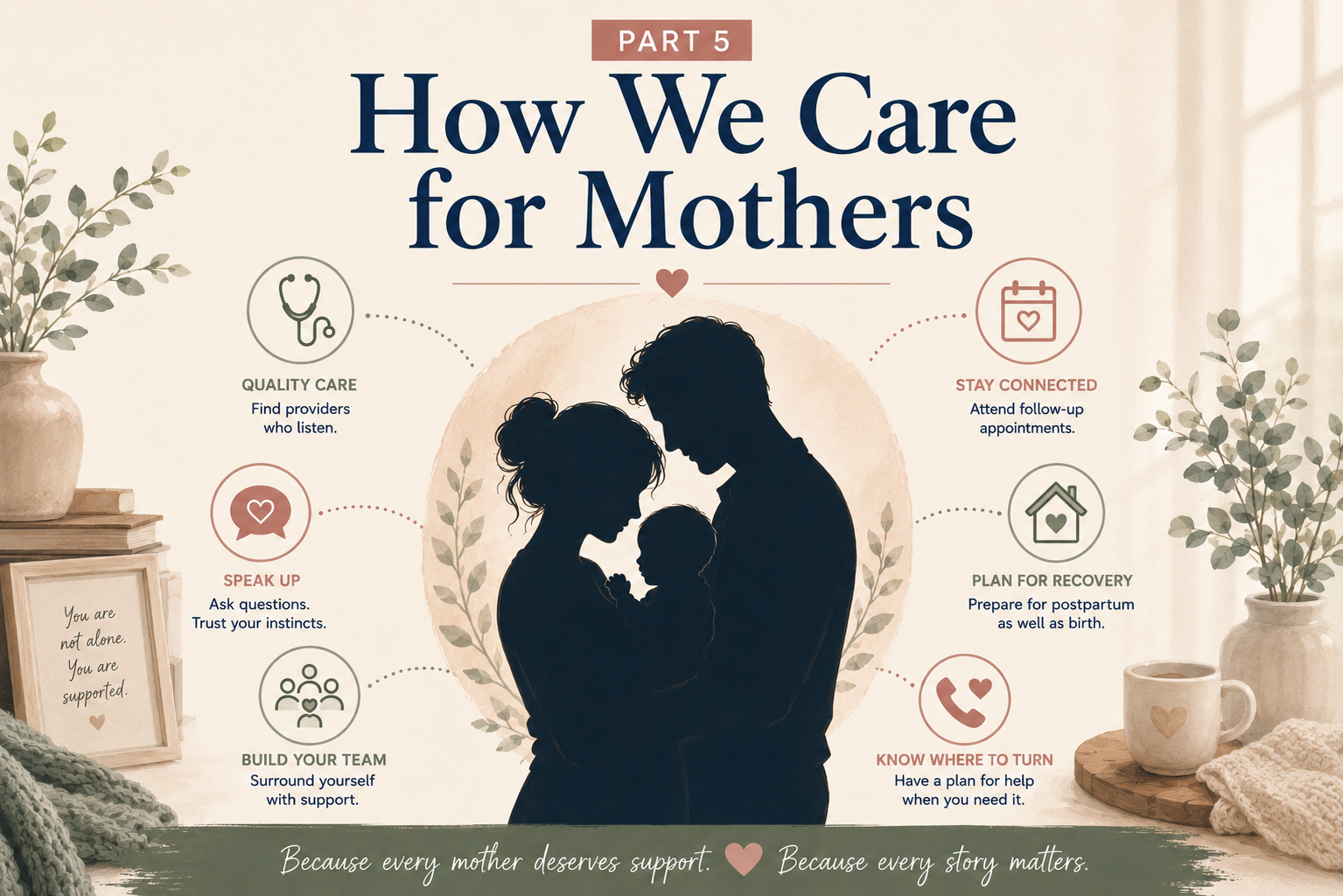
I would choose a provider who listens, learn the warning signs of postpartum complications before the baby arrives, and identify who I could call if I had concerns at two o’clock in the morning. I would build support before I needed it and make a plan not just for birth, but for recovery.
One of the biggest surprises in maternal health is that many of the most serious complications happen after delivery, when family and friends have gone home and everyone assumes the hard part is over.
It isn’t.
Birth is a moment, but recovery is a process, and far too many women are expected to navigate that process alone.
What Families Can Do
The good news is that you do not have to wait for the healthcare system to be perfected before advocating for yourself.
- Ask questions.
- Speak up if something doesn’t feel right.
- Attend follow-up appointments.
- Know the warning signs.
- Accept help when it is offered.
- Trust your instincts.
As nurses often tell new parents: if you’re worried enough to wonder whether you should call, call.
The policy debates will continue. The funding battles will continue. The arguments about how to improve maternal health will continue, and they should. But while those conversations unfold, families still deserve practical guidance.
If there is one thing I hope readers take away from this series, it is this: you are not powerless.
The system matters. The policies matter. The funding matters. But your voice matters too.
Find providers who listen. Build support before you need it. Stay connected to care after birth, and know when to ask for help.
Mothers do not benefit from arguments; they benefit from care that works.
And often, the first step toward safer care is knowing that you deserve to ask for it.

Kirsten Fisch, MSN, RNC-MNN, IBCLC, LCCE Kirsten is a women's health nurse who specializes in high-risk pregnancy and postpartum care. She is certified in Maternal Newborn Nursing, a board-certified lactation consultant (IBCLC), and a Lamaze Certified Childbirth Educator. She works with women from conception through the postpartum period. Passionate about empowering women throughout their reproductive journeys, Kirsten combines evidence-based care with compassionate support to promote the health and well-being of mothers and babies.